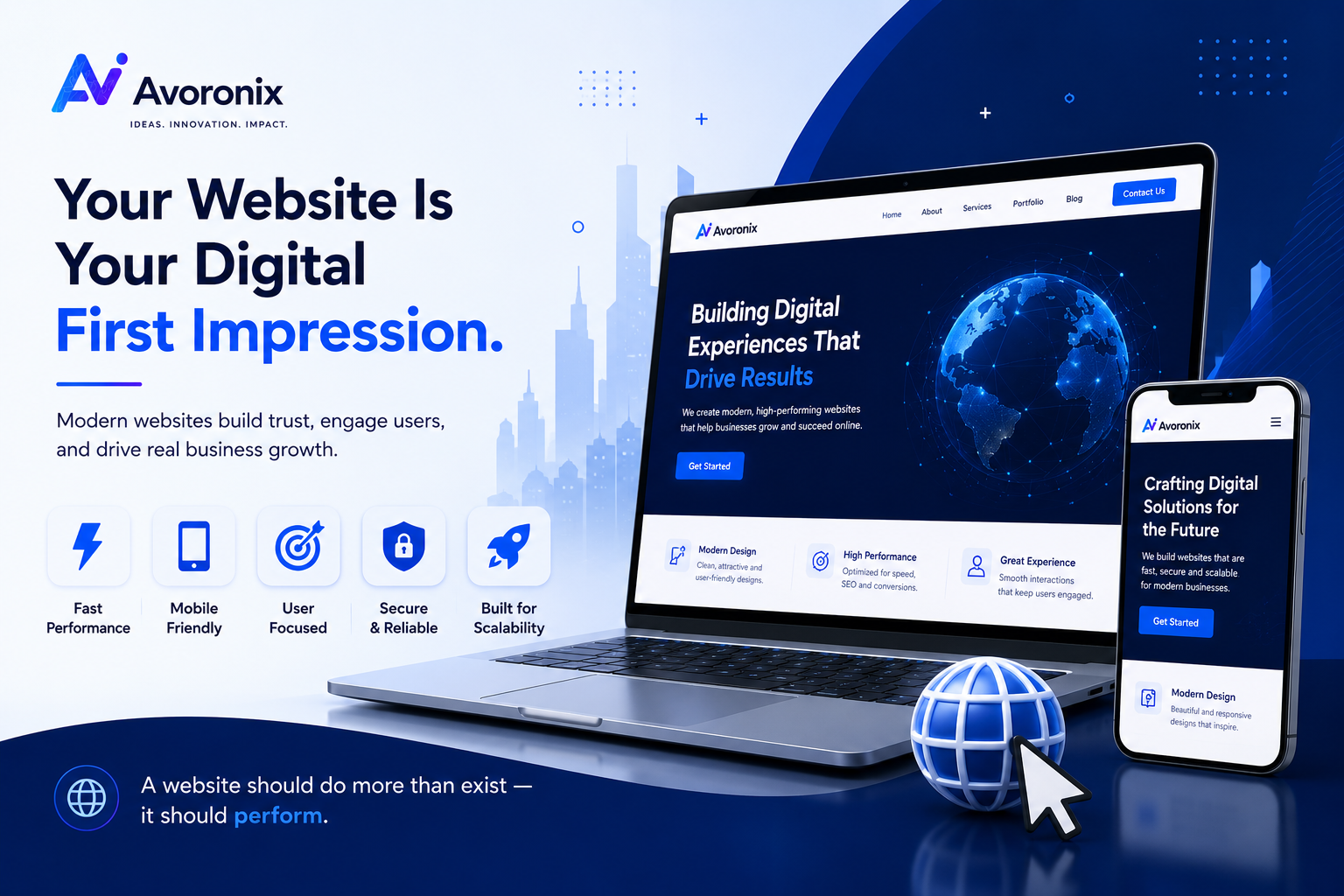
Your Website Is Your Digital First Impression
In today's digital-first world, a company's website is often the very first interaction a customer has with a business. Before speaking to a sales representative, visiting an office, or making a purchase decision, most people search online and evaluate a brand through its website.
And those first impressions happen fast. Studies consistently show that users form opinions about a website within seconds. An outdated, slow, or poorly designed website can quietly damage trust, reduce engagement, and push potential customers toward competitors.
At Avoronix, we believe a website should do far more than simply exist online — it should create impact, build credibility, and drive business growth.
Why First Impressions Matter More Than Ever
The internet has transformed customer behavior. Today's consumers expect fast-loading websites, mobile-friendly experiences, clean and modern design, easy navigation, secure browsing, and clear communication.
If a website fails to deliver these expectations, users often leave immediately. A business may offer excellent products or services, but if its digital presence feels outdated or unprofessional, potential customers may never stay long enough to discover that value. Your website is no longer just a marketing asset — it is a direct reflection of your brand.
The Hidden Cost of an Outdated Website
Many businesses underestimate how much an underperforming website can affect growth. An outdated website can lead to:
- Lower customer trust
- Reduced conversions
- Poor search engine visibility
- High bounce rates
- Lost sales opportunities
- Weak brand perception
In competitive industries, even small usability issues can make a major difference. Modern users expect smooth and seamless digital experiences. Businesses that fail to evolve digitally risk falling behind.
What Modern Businesses Need in a Website
A successful modern website combines performance, functionality, design, and user experience. Here are the key elements every business website should include:
1. Speed & Performance
Website speed directly impacts user experience and business performance. Slow-loading websites frustrate users and often result in lost traffic. Modern websites should load quickly across devices, optimize images and assets, provide smooth browsing experiences, and deliver fast response times. Speed is no longer optional — it is expected.
2. Mobile-Friendly Design
A large percentage of internet traffic now comes from mobile devices. A responsive website ensures users can navigate easily on smartphones, tablets, laptops, and desktop screens. Mobile-friendly design improves user engagement, accessibility, search engine rankings, and conversion rates. A website that performs poorly on mobile can significantly limit business growth.
3. User-Focused Experience
Great websites are designed around the user. This means clear navigation, intuitive layouts, easy-to-find information, simple calls-to-action, and minimal friction. The goal is not just to attract visitors — it is to guide them toward meaningful action. A strong user experience builds trust and encourages long-term customer relationships.
4. Security & Reliability
Website security has become increasingly important in today's digital environment. Users expect businesses to protect their personal information, payment data, and browsing activity. Modern websites should implement SSL certificates, secure authentication systems, regular updates, and data protection practices. A secure website strengthens both credibility and customer confidence.
5. Scalability for Future Growth
As businesses grow, their digital infrastructure must grow with them. Scalable websites are built to handle increasing traffic, support new features, integrate with business tools, and adapt to changing needs. A scalable foundation prevents businesses from constantly rebuilding systems as they expand.
Design Alone Is Not Enough
Many businesses focus only on visual appearance when building websites. While modern design is important, performance and functionality matter equally. A successful website should look professional, load quickly, work smoothly, convert visitors into customers, and support business goals. The best digital experiences combine aesthetics with usability.
The Role of Websites in Business Growth
A high-performing website can become one of the most powerful growth tools for a business. It helps companies build trust, reach wider audiences, generate leads, increase conversions, strengthen brand identity, and improve customer communication. In many cases, a website works as a business's digital headquarters — operating 24/7 to support customers and drive engagement.
How Avoronix Approaches Modern Web Development
At Avoronix, we focus on creating digital experiences that are modern, scalable, user-focused, high-performing, and business-driven. We believe technology should empower businesses and simplify user experiences.
Our approach combines clean UI/UX design, responsive development, performance optimization, scalable architecture, and modern web technologies. Because a website should not simply represent a business — it should help grow it.
Final Thoughts
In today's competitive digital world, your website is often your strongest first impression. An effective website does more than showcase information. It builds trust, creates engagement, and supports long-term business growth.
Modern businesses need websites that are ⚡ Fast, 📱 Mobile-friendly, 🎯 User-focused, 🔒 Secure, and 🚀 Built for scalability. Because in the digital era, a website should do more than exist — it should perform.
This is so true! We revamped our company website last year and saw a 35% increase in lead generation. First impressions really do matter in the digital world.
Same experience here. Mobile responsiveness alone made a huge difference in our conversion rates. Great article!
The point about scalability is crucial. So many startups build websites that can't handle growth. Planning for scale from day one saves a lot of headaches later.